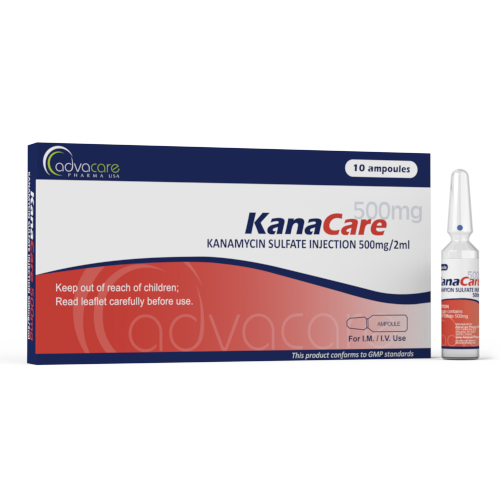


Kanamycin Sulfate Injection
Dosage
Packaging
What is Kanamycin Sulfate?
Active Ingredients: Kanamycin Sulfate
Kanamycin Sulfate Injection is a sterile parenteral antibiotic formulation intended for the treatment of serious infections caused by bacteria that are susceptible to kanamycin. It belongs to the aminoglycoside class of antibacterial medicines and is generally reserved for situations in which parenteral antibacterial therapy is clinically appropriate.
Kanamycin has bactericidal activity. Like other aminoglycosides, it binds to the 30S subunit of the bacterial ribosome and disrupts bacterial protein synthesis. This interference with translation results in the production of abnormal proteins and ultimately inhibits the survival of susceptible bacteria.
The clinical activity of kanamycin is primarily relevant to susceptible aerobic bacteria, particularly certain Gram-negative organisms. Selection of kanamycin should take into account the suspected or identified pathogen, the site and severity of infection, local antimicrobial-resistance patterns, and, whenever possible, culture and antimicrobial susceptibility testing.
Kanamycin is not active against viral infections. To support responsible antibiotic use and limit the development of antimicrobial resistance, treatment should be restricted to infections that are proven or strongly suspected to be caused by susceptible bacteria.
In some countries, kanamycin also retains approved indications relating to tuberculosis. However, its role in tuberculosis treatment has changed considerably as treatment standards have evolved. Current WHO guidance does not recommend kanamycin as part of MDR/RR-TB treatment regimens. Any use for tuberculosis should therefore follow the approved product information and current national or international treatment guidelines applicable in the destination market.
AdvaCare Pharma supplies Kanamycin Sulfate Injection in 500mg/2ml and 1g/3ml presentations. The finished product is available in ampoule packaging suitable for pharmaceutical distribution, institutional procurement, hospital supply and other regulated healthcare channels.
Why are we a leading Kanamycin manufacturer?
AdvaCare Pharma is a leading manufacturer of Kanamycin Injection. To ensure the quality of our manufactured pharmaceutical injection products, we adhere to stringent GMP guidelines at our manufacturing facilities. We partner with pharmaceutical distributors, hospitals, pharmacies, NGOs, and government institutions across over 65 markets worldwide, and our track record over the past two decades demonstrates that AdvaCare Pharma is a reliable Kanamycin manufacturer and supplier dedicated to high-quality and efficacious medicines.
Uses
What is Kanamycin Sulfate used for?
Kanamycin Sulfate Injection is used for the short-term treatment of serious bacterial infections caused by susceptible organisms.
Depending on the approved prescribing information in the destination market, kanamycin may be indicated for susceptible infections affecting areas such as:
- the respiratory tract, including certain cases of bacterial pneumonia
- the urinary tract
- the skin and soft tissues
- bones and joints
- the abdomen and biliary tract
- the bloodstream and other serious systemic infections
The choice of antibiotic should be based on clinical assessment and, whenever possible, bacterial culture and antimicrobial susceptibility testing. Local treatment guidelines and resistance patterns should also be considered.
Kanamycin has historically been used in tuberculosis treatment and remains registered for this indication in some markets. Its use in tuberculosis should not be generalized across markets, however. Current WHO recommendations no longer include kanamycin in MDR/RR-TB regimens, and tuberculosis treatment should follow current specialist and national programme guidance.
How are Kanamycin Sulfate Injections used?
Kanamycin Sulfate Injection is administered parenterally by a qualified healthcare professional.
Depending on the locally registered product information, administration may be by intramuscular injection or intravenous infusion. The approved route, dilution requirements, infusion rate and duration of treatment should always follow the prescribing information registered for the specific product and market.
Before and during treatment, renal function should be assessed. Monitoring of hearing and vestibular function may also be appropriate, particularly in patients receiving higher doses or prolonged treatment and in those with additional risk factors for aminoglycoside toxicity.
Where therapeutic drug monitoring is available, measurement of serum aminoglycoside concentrations may be used to help maintain appropriate exposure and reduce the risk of toxicity.
What dose should be given?
The dose of Kanamycin Sulfate Injection should be individualized according to the patient's body weight, age, renal function, type and severity of infection, causative organism and response to treatment.
Dose reduction or extension of the dosing interval may be necessary in patients with impaired renal function because kanamycin is primarily eliminated through the kidneys. Accumulation can increase the risk of nephrotoxicity and ototoxicity.
Because approved dosing schedules can differ between countries and clinical indications, the dosage stated in the locally registered prescribing information should be followed. Kanamycin should be prescribed and administered by appropriately qualified healthcare professionals.
Side Effects
As with all pharmaceuticals, unwanted effects can occur with the use of Kanamycin Sulfate Injection.
Reported side effects may include, but are not limited to:
- injection-site pain or induration
- skin rash or other hypersensitivity reactions
- headache
- changes in renal laboratory parameters
- electrolyte abnormalities
Aminoglycosides can also cause important dose- and exposure-related toxicities. Serious adverse effects associated with kanamycin may include:
- tinnitus, hearing impairment or other ototoxicity
- dizziness or disturbances of balance associated with vestibular toxicity
- acute kidney injury or other significant renal impairment
- severe hypersensitivity reactions, including anaphylactic reactions
- neuromuscular blockade and respiratory depression, particularly in susceptible patients or when interacting medicines are used
Hearing damage caused by aminoglycosides can be irreversible. The risk of renal and auditory toxicity may be increased in patients with impaired renal function, older patients, patients receiving high doses or prolonged treatment, and patients receiving other nephrotoxic or ototoxic medicines.
Renal function, clinical response and signs of auditory or vestibular toxicity should be monitored as clinically appropriate during therapy.
For a comprehensive understanding of all potential side effects, consult the approved prescribing information and a qualified medical professional.
If symptoms such as hearing changes, tinnitus, marked dizziness, reduced urine output, difficulty breathing or signs of a severe allergic reaction develop, prompt medical assessment is required.
Precautions
Do NOT use Kanamycin Sulfate Injection if: • You are allergic to kanamycin, any of the formulation's ingredients, or have a history of serious hypersensitivity to an aminoglycoside antibiotic.
Before treatment, inform your doctor if:
- You have impaired kidney function or a history of kidney disease.
- You have hearing loss, tinnitus, balance problems or another disorder affecting the auditory or vestibular system.
- You have myasthenia gravis or another condition affecting neuromuscular function.
- You are dehydrated.
- You are pregnant, planning a pregnancy or breastfeeding.
- You are an older adult or have another condition that may increase the risk of aminoglycoside accumulation or toxicity.
Before treatment, consult your doctor regarding any medications you are taking to address potential drug interactions.
Particular caution may be required with other medicines that can affect kidney function or hearing, including other aminoglycoside antibiotics, vancomycin, amphotericin B, cisplatin and related platinum-containing medicines, and certain potent diuretics such as furosemide. Anesthetics and neuromuscular-blocking medicines may also increase the risk of neuromuscular blockade.
Renal function should be evaluated before and during treatment. Audiometric assessment should be considered in patients at increased risk of ototoxicity or when treatment duration makes monitoring appropriate.
Kanamycin should be used for the shortest clinically appropriate period and, whenever possible, treatment should be guided by bacterial susceptibility results. Prolonged exposure increases the risk of serious toxicity.
This medication may not be suitable for people with certain medical conditions, so it is important to consult a doctor before treatment.
