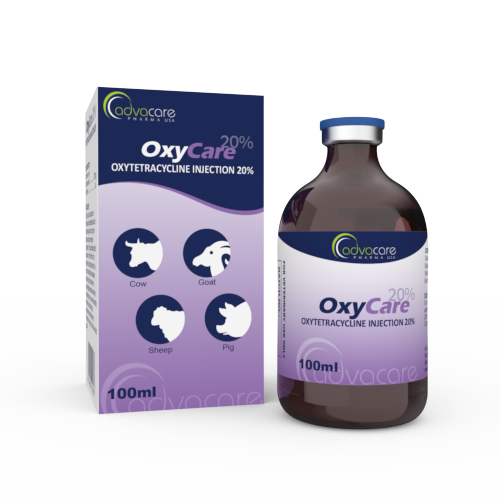


Oxytetracycline Injection
Dosage
Packaging
What is Oxytetracycline?
Active Ingredients: Oxytetracycline
Oxytetracycline Injection is an antibiotic used to treat many kinds of bacterial diseases in livestock like cows, goats, horses, sheep and pigs. In cattle, it is indicated for infections such as pneumonia, shipping fever, foot rot, diphtheria, bacterial enteritis, wooden tongue, leptospirosis, and anaplasmosis. Validating its role in oxytetracycline first-line cattle pneumonia treatment, the 2026 ENOVAT BRD guidelines conditionally recommend injectable oxytetracycline as a first-line empirical antimicrobial choice for cattle with acute bovine respiratory disease (BRD).
Oxytetracycline is also indicated for the treatment of bacterial enteritis and leptospirosis and the prevention of atrophic rhinitis in pigs.
The drug works by targeting and inhibiting the bacteria responsible for intestinal infections, alleviating symptoms like diarrhea and abdominal discomfort. For leptospirosis, which can affect the liver and kidneys, it helps by eradicating the Leptospira bacteria, reducing the risk of severe health complications and aiding in recovery.
Oxytetracycline is a broad-spectrum antibiotic in the tetracycline family. It is derived from the fermented product of Streptomyces rimosus. Oxytetracycline works by inhibiting protein synthesis in the bacteria. It is active against both gram-positive and gram-negative bacteria, including Mycoplasma pneumoniae, Diplococcus pneumoniae, and Escherichia coli. It also shows action against Chlamydia, Rickettsia, and spirochetes.
Oxytetracycline exerts its therapeutic effect by binding to the 30S ribosomal subunit of bacteria, inhibiting the binding of aminoacyl-tRNA to the RNA-ribosome complex. This action blocks the addition of amino acids to the growing peptide chain during protein synthesis. As a result, the bacterial cell's ability to synthesize proteins essential for its survival and multiplication is impeded.
This mechanism of action is effective against a wide range of bacteria due to its ability to penetrate bacterial cells and affect intracellular pathogens. But its efficacy can be influenced by the bacteria's susceptibility and the drug concentration achieved at the site of infection. While oxytetracycline is effective against many types of bacteria, its use should be guided by susceptibility testing where possible.
This formulation of oxytetracycline is for veterinary purposes only.
AdvaCare Pharma is a global supplier of Oxytetracycline Injections. AdvaCare excels at the production of high-quality yet cost-effective treatments for veterinary wholesale and resale sectors. This medication has been manufactured in our GMP-certified facilities located in China, India, and the USA.
Why are we a trusted Oxytetracycline manufacturer?
Oxytetracycline Injection is manufactured and globally distributed by AdvaCare Pharma, a leading manufacturer of veterinary injections in the pharmaceutical industry. We have been committed to distributing high-quality, GMP-certified veterinary medications for the global market over the past 20 years. As a top Oxytetracycline manufacturer, we ensure that all of our 100+ veterinary injections surpass our distributors' requirements by conducting routine internal and third-party facility audits.
Uses
What is Oxytetracycline used for?
It's used to treat infections such as:
- pneumonia and shipping fever
- foot rot and diphtheria
- wooden tongue
- leptospirosis
- anaplasmosis
- bacterial enteritis
- atrophic rhinitis in swine (prophylaxis)
What animals can be treated with Oxytetracycline Injection?
It's recommended for livestock animals like cows, horses, goats, sheep, and pigs.
How is Oxytetracycline Injection used?
This medication has been manufactured as a liquid, which is packaged in a vial. It is intended to be administered by intramuscular injection. Oxytetracycline Injection is intended for veterinary use only.
What is the withdrawal period for Oxytetracycline?
For meat, the withdrawal period is 28 days. The withdrawal time is 24-72 hours for milk.
How quickly does Oxytetracycline Injection start working after administration?
The onset of action can vary, but improvement in symptoms may be observed within 24-48 hours after administration. The full effect may take longer, depending on the severity of the infection.
Is Oxytetracycline Injection effective against all types of bacteria?
While Oxytetracycline is a broad-spectrum antibiotic, it's most effective against certain gram-positive and gram-negative bacteria, including Mycoplasma, Chlamydia, Rickettsia, and some spirochetes.
How does Oxytetracycline work against bacteria?
Oxytetracycline, like other tetracyclines, acts by inhibiting protein synthesis in bacteria, which is a crucial process for their growth and multiplication. By blocking the attachment of aminoacyl-tRNA to the mRNA-ribosome complex, the production of proteins needed by the bacteria to function and replicate is also stopped.
Is Oxytetracycline Injection safe for newborn or very young animals?
Caution is advised when using Oxytetracycline in very young animals, as it may affect bone and tooth development. Use in these animals should be under veterinary supervision and only if the benefits outweigh the risks.
Is there a specific age at which Oxytetracycline Injection becomes more effective or less effective?
Effectiveness is not directly related to the age of the animal, but younger and older animals may be more sensitive. Dosage adjustments may be necessary for these age groups.
Is there a risk of antibiotic resistance with Oxytetracycline Injection?
Yes, there's a risk of developing resistance, particularly if used improperly or too frequently. It's important to use this medication as directed by a veterinarian to minimize this risk.
How should Oxytetracycline Injection be stored?
This medication should be stored in a dark, dry location under 30°C. The vial should be sealed tightly. Exposure to light, extreme temperatures, or moisture can degrade the effectiveness of the drug.
Is oxytetracycline injection recommended as first-line therapy for bovine respiratory disease?
Yes. The 2026 ENOVAT clinical guidelines conditionally recommend injectable oxytetracycline as a first-line empirical antimicrobial choice for cattle with acute bovine respiratory disease (BRD).
What do ENOVAT guidelines recommend for BRD treatment in cattle? The latest European guidelines emphasize evidence-based bovine respiratory disease antimicrobial selection. Oxytetracycline provides effective first-line control of BRD pathogens while conserving higher-priority, critically important antimicrobials (such as fluoroquinolones and macrolides) for severe cases. Furthermore, ENOVAT advises against routine NSAID co-administration solely to prevent antimicrobial treatment failure. Utilizing this medication as an initial intervention strongly supports oxytetracycline injection livestock stewardship by limiting unnecessary use of advanced antimicrobials and combating global antimicrobial resistance.
What do ENOVAT guidelines recommend for BRD treatment in cattle?
The ENOVAT BRD guidelines recommend Oxytetracycline first-line cattle pneumonia treatment for acute cases, while advising against the primary use of critical fluoroquinolones and routine NSAID co-administration solely to prevent treatment failure.
Dosage
How much Oxytetracycline Injection should be given to cows and other livestock?
The usual dose is 10-20mg per kg of body weight, given once every 24 hours IM.
How long should Oxytetracycline Injection be administered to cows and other livestock?
The duration of treatment depends on the type and severity of the infection. It should continue for 24-48 hours after symptoms have subsided, based on veterinary advice.
Is the dosage of Oxytetracycline Injection the same for all breeds and sizes of livestock?
While the general dosage guideline is 10-20mg per kg of body weight, adjustments may be needed based on the breed, size, and health condition. Smaller or more sensitive breeds may require careful dosing.
What should be done if a dose of Oxytetracycline Injection is missed?
If a dose is missed, it should be administered as soon as possible. However, if it's almost time for the next scheduled dose, skip the missed dose and resume the regular dosing schedule.
What precautions should be taken when calculating the dosage for young or pregnant animals?
Special caution is needed when calculating dosages for young, pregnant, or lactating animals. These groups may be more sensitive to the effects of oxytetracycline, and a veterinarian should always be consulted prior to administration.
Can the frequency of Oxytetracycline Injection be increased in severe cases?
The frequency should generally not exceed once every 24 hours. In severe cases, a veterinarian might adjust the treatment protocol, but increased frequency can also increase the risk of side effects.
Refer to a veterinary doctor or pharmacist for guidelines on dosage.
Side Effects
As with all pharmaceuticals, some unwanted effects can occur from the use of Oxytetracycline Injection.
Some common side effects may include but are not limited to:
- irritation at the injection site
- gastrointestinal effects (upset stomach, nausea, diarrhea)
- sensitivity to sunlight
- rash
Serious side effects may include: • allergic reaction
For mild reactions, such as local irritation at the injection site or mild gastrointestinal upset, monitoring the animal closely and providing supportive care as needed may be sufficient. If the animal exhibits more severe symptoms, such as a significant allergic reaction, rash, or pronounced gastrointestinal distress, seek veterinary attention promptly.
A complete record of any side effects should be kept and reported to the veterinarian, as this information is vital for adjusting the treatment plan.
For a comprehensive list of all possible side effects of this medication, consult a veterinarian.
Precautions
Do NOT use Oxytetracycline Injection for an animal that:
- has a known allergy or hypersensitivity to any of the ingredients.
- has had a hypersensitivity reaction to other tetracyclines.
Treatment with this drug should be administered with caution for an animal that:
- is pregnant.
- has renal insufficiencies.
Caution is advised when using this antibiotic in very young animals, as tetracyclines can interfere with bone growth and tooth development due to their ability to chelate calcium. Avoid concurrent use with other potentially nephrotoxic or hepatotoxic drugs to prevent additive effects.
As with all antibiotics, the complete course prescribed by the veterinarian should be followed to minimize the risk of resistance development, even if the animal appears to have recovered.
References
European Network for Optimization of Veterinary Antimicrobial Therapy (ENOVAT) guidelines for antimicrobial and non-steroidal anti-inflammatory drug use in bovine respiratory disease
This international evidence-based guideline evaluated clinical efficacy, animal-level outcomes, and stewardship impacts of antimicrobial therapies for acute undifferentiated bovine respiratory disease (BRD) in cattle.
The expert panel conditionally recommends oxytetracycline injection as a first-line empirical treatment choice based on local susceptibility and herd history, while explicitly advising against the primary or secondary use of highest-priority critically important antimicrobials like fluoroquinolones.
The conclusion of these guidelines is that oxytetracycline injection serves as a highly effective first-line therapy for acute BRD that supports livestock antimicrobial stewardship by conserving critical higher-tier antibiotics.
A pilot study on the efficacy of benzylpenicillin, oxytetracycline, and florfenicol for treatment of naturally occurring bovine respiratory disease
This field trial evaluated 117 commercial calves with naturally occurring BRD to compare treatment response, relapse, and long-term slaughter outcomes across three parenteral antimicrobial regimens.
Treatment with oxytetracycline injection achieved a 90.0% clinical response rate at 30 days and maintained an 85.0% response rate through slaughter, showing no statistically significant differences in efficacy, relapse, or mortality compared to florfenicol or procaine benzylpenicillin.
The study concluded that injectable oxytetracycline remains an effective therapeutic choice for clinical BRD treatment in calves, offering clinical cure rates equivalent to newer broad-spectrum agents.
A systematic review and network meta-analysis of injectable antimicrobial regimens for control of bovine respiratory disease in feedlot cattle
This network meta-analysis compiled data from 46 clinical trials across 167 study arms to evaluate the comparative efficacy of injectable antimicrobial formulations administered to high-risk cattle upon arrival at feedlots.
Injectable oxytetracycline demonstrated statistically significant efficacy in controlling and reducing the incidence of BRD over the initial 45-day feedlot period compared to untreated control groups.
The conclusion of this meta-analysis is that oxytetracycline injection provides reliable control of respiratory pathogens in feedlot cattle while presenting distinct stewardship advantages over higher-priority antibiotic classes.
Evaluation of long-acting oxytetracycline injectable formulations in experimental Pasteurella pneumonia in calves
This controlled trial evaluated the therapeutic efficacy of a single long-acting oxytetracycline injection (200mg/mL) compared to multi-dose conventional formulations (50mg/mL) and non-medicated controls in calves challenged with Pasteurella respiratory infections.
Calves administered a single dose of long-acting oxytetracycline showed rapid resolution of fever, significant reduction in respiratory symptoms, and sustained improvements in daily weight gain and feed intake post-challenge.
The trial demonstrated that high-concentration long-acting oxytetracycline maintains sustained therapeutic blood concentrations, achieving clinical cure equivalent to daily dosing while minimizing animal handling stress.
What are the most common animals Oxytetracycline Injection is used for?
Oxytetracycline Injection is widely used in veterinary medicine for a variety of livestock animals, each with specific indications:
- Cow: In cows, Oxytetracycline Injection is conditionally recommended by 2026 ENOVAT guidelines as a first-line empirical treatment for acute bovine respiratory disease (BRD) and shipping fever. It is also indicated for foot rot, diphtheria, bacterial enteritis, leptospirosis, and anaplasmosis, delivering reliable clinical efficacy while meeting modern livestock antimicrobial stewardship standards.
- Goat: For goats, it is often used to treat conditions like pneumonia, foot rot, and bacterial enteritis. It is also used in the management of leptospirosis, a bacterial disease that can cause serious health issues in goat herds.
- Horse: In horses, this drug is primarily used for treating respiratory infections, such as pneumonia, and other bacterial diseases like leptospirosis.
- Sheep: Oxytetracycline is utilized in sheep for similar purposes as in goats and cows, treating bacterial conditions like pneumonia, foot rot, and enteritis. It's particularly important for managing outbreaks of leptospirosis and other bacterial diseases that can quickly spread in flocks.
- Pig: In pigs, this antibiotic is indicated for the treatment of bacterial enteritis and leptospirosis, as well as for the prevention of atrophic rhinitis, a condition affecting the nasal passages.
