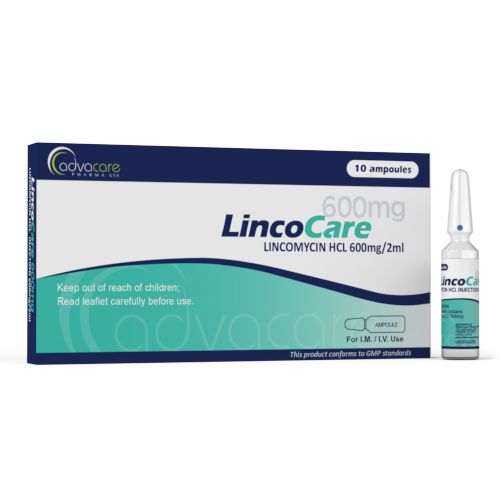


Lincomycin HCl Injection
Dosage
Packaging
What is Lincomycin HCl?
Active Ingredients: Lincomycin HCl
Lincomycin HCl Injection is a parenteral lincosamide antibacterial medicine formulated for human use at a strength of 600mg/2ml (300mg/ml). It is used for serious infections caused by susceptible strains of streptococci, pneumococci and staphylococci. Its use is generally reserved for patients with a penicillin allergy or for situations in which, in the judgment of the prescribing clinician, a penicillin is inappropriate.
Selection of lincomycin should be guided by the locally approved prescribing information, the site and severity of infection, and culture and susceptibility results when available. The U.S. FDA provides current [antibacterial susceptibility testing criteria](https://www.fda.gov/STIC) to support evidence-based interpretation of antimicrobial susceptibility results.
Lincomycin inhibits bacterial protein synthesis by binding to the 23S RNA of the 50S ribosomal subunit. It is predominantly bacteriostatic in vitro. Cross-resistance can occur between lincomycin and clindamycin, and resistance patterns should be considered when selecting therapy.
Lincomycin should not be used for viral infections or minor bacterial infections for which safer antimicrobial options are appropriate. It is also not recommended for the treatment of meningitis because concentrations achieved in cerebrospinal fluid may be inadequate.
AdvaCare Pharma manufactures Lincomycin HCl Injection as a sterile small-volume human pharmaceutical injection for international markets. The 600mg/2ml presentation is available in ampoule packaging for professional healthcare use, with packaging and regulatory documentation supplied according to applicable market requirements.
This page describes Lincomycin HCl Injection for human pharmaceutical use. For animal-health applications, see the separate [Veterinary Lincomycin HCl Injection](https://www.advacarepharma.com/en/veterinary/lincomycin-hcl-injection).
Why are we a leading Lincomycin manufacturer?
AdvaCare Pharma is a leading manufacturer of Lincomycin Injection. To ensure the quality of our manufactured pharmaceutical injection products, we adhere to stringent GMP guidelines at our manufacturing facilities. We partner with pharmaceutical distributors, hospitals, pharmacies, NGOs, and government institutions across over 65 markets worldwide, and our track record over the past two decades demonstrates that AdvaCare Pharma is a reliable Lincomycin manufacturer and supplier dedicated to high-quality and efficacious medicines.
Uses
What is Lincomycin HCl used for?
Lincomycin HCl Injection is used for serious bacterial infections caused by susceptible strains of streptococci, pneumococci, and staphylococci. Its use is generally reserved for patients with a penicillin allergy or when a penicillin is considered inappropriate by the prescribing clinician.
Lincomycin should not be used for minor bacterial infections or viral infections. When culture and susceptibility results are available, they should be considered when selecting or modifying antibacterial therapy.
How is a Lincomycin HCl Injection used?
This medication is manufactured as a solution for parenteral administration. It may be administered by intramuscular (IM) injection or by intravenous (IV) infusion under the supervision of a qualified healthcare professional.
For IV administration, lincomycin must be diluted in a suitable infusion solution and administered slowly. It should not be given as a rapid IV bolus.
How does Lincomycin HCl Injection work?
Lincomycin binds to the 23S RNA of the 50S bacterial ribosomal subunit and inhibits protein synthesis. Its activity is predominantly bacteriostatic, meaning it inhibits the growth and multiplication of susceptible bacteria.
Cross-resistance can occur between lincomycin and clindamycin. Local susceptibility patterns and microbiology results should therefore be considered when treatment is selected.
What dose should be given?
The dose and duration of treatment depend on the severity and site of infection, the susceptibility of the causative organism, the patient's age and clinical status, and kidney or liver function.
Reference human prescribing information describes the following parenteral doses:
- Adults, IM: 600mg every 24 hours for serious infections. For more severe infections, 600mg may be administered every 12 hours or more often when clinically indicated.
- Adults, IV: 600mg to 1g every 8 to 12 hours for serious infections. Higher doses may be required for more severe infections under close medical supervision.
- Pediatric patients over 1 month of age, IM: 10mg/kg every 24 hours for serious infections, or every 12 hours or more often for more severe infections.
- Pediatric patients over 1 month of age, IV: 10-20mg/kg/day in divided doses, depending on infection severity.
IV doses must be appropriately diluted and infused over the recommended period. Patients with severe renal or hepatic impairment may require dosage modification and additional monitoring.
These doses are provided as general clinical reference information. The exact regimen must follow the locally approved product information and the prescribing healthcare professional's instructions.
Can Lincomycin HCl Injection be used in patients with kidney or liver impairment?
Lincomycin is eliminated more slowly in patients with severe renal or hepatic impairment. Dose adjustment, clinical monitoring, and in some cases monitoring of serum lincomycin concentrations may be necessary, particularly during high-dose therapy.
Can Lincomycin HCl Injection be used during pregnancy or breastfeeding?
Use during pregnancy should be assessed by a healthcare professional and limited to situations in which treatment is clearly needed according to the approved local prescribing information.
Lincomycin has been reported in human breast milk. A healthcare professional should weigh the importance of treatment to the mother against the potential risk to the nursing infant when deciding whether breastfeeding or the medicine should be discontinued.
Can Lincomycin HCl Injection be used to treat meningitis?
Lincomycin is not considered suitable for the treatment of meningitis because concentrations achieved in cerebrospinal fluid may be inadequate.
Can Lincomycin HCl Injection interact with other medicines?
Lincomycin has neuromuscular blocking properties and may enhance the effects of other neuromuscular blocking agents. Patients should inform the prescribing healthcare professional about all prescription medicines, over-the-counter medicines, and supplements they are taking before treatment.
Refer to a doctor or pharmacist for guidelines on dosage, administration, interactions, and treatment duration.
Side Effects
As with all pharmaceuticals, unwanted effects can occur from the use of Lincomycin HCl Injection.
Reported side effects include, but may not be limited to:
- diarrhea
- nausea
- vomiting
- abdominal pain or discomfort
- rash, itching, or hives
- headache or dizziness
- pain, irritation, induration, or sterile abscess at the intramuscular injection site
Serious side effects may include:
- severe or persistent diarrhea, including Clostridioides difficile-associated diarrhea or colitis
- severe allergic reactions, including anaphylaxis or angioedema
- severe skin reactions, including Stevens-Johnson syndrome, toxic epidermal necrolysis, or acute generalized exanthematous pustulosis
- blood disorders such as neutropenia, thrombocytopenia, agranulocytosis, or pancytopenia
- jaundice or abnormal liver function
- renal impairment
- hypotension, thrombophlebitis, or severe cardiopulmonary reactions associated with inappropriate IV administration
For a comprehensive understanding of all potential side effects, consult a medical professional and the locally approved prescribing information.
Seek medical attention promptly if severe diarrhea, difficulty breathing, facial or throat swelling, a severe skin reaction, jaundice, unusual bleeding or bruising, or other serious symptoms develop.
Precautions
Do NOT use Lincomycin HCl Injection if:
- You are allergic to lincomycin, clindamycin, or any ingredient in the formulation.
- You are breastfeeding.
Before treatment, consult a doctor if:
- You have a history of gastrointestinal disease, particularly colitis.
- You have severe kidney or liver impairment.
- You have asthma or a history of significant allergic reactions.
- You are pregnant, planning a pregnancy, or breastfeeding.
- You are receiving neuromuscular blocking medicines or other prescription medicines that may interact with treatment.
Lincomycin has been associated with severe [Clostridioides difficile-associated diarrhea](https://www.cdc.gov/c-diff/hcp/clinical-overview/) and colitis. Significant, persistent, watery, or bloody diarrhea occurring during treatment or in the weeks after antibiotic use requires prompt medical assessment.
For intravenous use, lincomycin must be appropriately diluted and infused at the recommended rate. It should not be administered as a rapid intravenous bolus because severe cardiopulmonary reactions have been reported when excessive concentrations or infusion rates were used.
During prolonged therapy, periodic monitoring of liver function, kidney function, and blood counts may be required. Patients with severe renal or hepatic impairment may require dosage adjustment and closer monitoring.
Lincomycin should be used only for infections proven or strongly suspected to be caused by susceptible bacteria. Appropriate antibiotic selection, culture-guided treatment where available, and completion of the prescribed course help reduce unnecessary antibiotic exposure and the development of [antimicrobial resistance](https://www.who.int/news-room/fact-sheets/detail/antimicrobial-resistance).
Before treatment, consult your doctor regarding any medications you are taking to address potential drug interactions.
This medication may not be suitable for people with certain conditions. Treatment decisions should follow the locally approved prescribing information and the judgment of a qualified healthcare professional.
