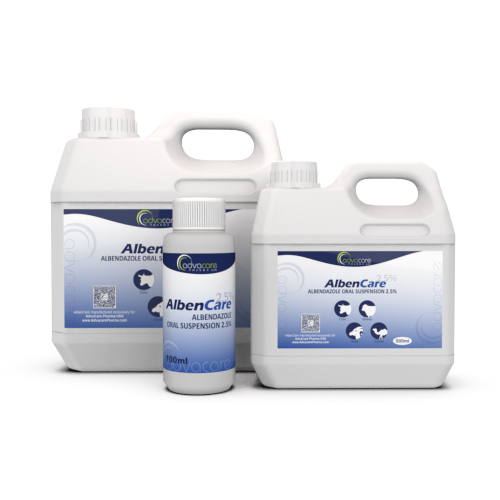


Albendazole Oral Suspension
Dosage
Packaging
What is Albendazole?
Active Ingredients: Albendazole
Veterinary Albendazole Oral Suspension is a benzimidazole anthelmintic for susceptible internal parasites in authorized animal species. AdvaCare Pharma supplies 25mg/ml (2.5%), 50mg/ml (5%) and 100mg/ml (10%) strengths. The liquid formulation supports accurate oral administration when used with calibrated dosing equipment.
Albendazole binds parasite β-tubulin and inhibits microtubule formation. Glucose uptake and energy production are disrupted, which damages susceptible nematodes, cestodes and trematodes. Spectrum and activity against adult, larval or egg stages are parasite- and dose-dependent. Albendazole should not be described as effective against protozoa as a class.
Authorized uses vary by country and formulation. Depending on the approved label, veterinary albendazole suspensions may control gastrointestinal roundworms, lungworms, tapeworms and adult liver fluke in cattle, sheep or other specified livestock. Consult an official veterinary albendazole product record for an example of species-specific indications, contraindications and withdrawal information.
Accurate body-weight estimation and dose calculation are essential. Underdosing can reduce efficacy and select for anthelmintic resistance. Unnecessary repeat treatment should be avoided. Farm parasite-control plans should use local epidemiology, diagnostic evidence and veterinary advice.
Food-producing animals require strict compliance with the approved meat, milk and offal withdrawal periods. These intervals are product-, dose-, route-, species- and market-specific. Never apply a single universal withdrawal period across all albendazole products.
AdvaCare Pharma manufactures Veterinary Albendazole Oral Suspension in GMP-compliant facilities for global animal-health markets. Product specifications, pack sizes and regulatory documentation are available to support veterinary distributors and registration teams. This page does not apply to the 400mg/10ml human formulation.
Why are we a leading Albendazole manufacturer?
AdvaCare Pharma is a GMP-certified manufacturer of Albendazole Oral Suspension for veterinary use. To ensure that our products meet and exceed our distributors' standards, we conduct routine internal and third-party facility inspections. As an experienced Albendazole manufacturer, our highly skilled team of professionals offers comprehensive support that extends throughout the entire process, including document and registration assistance.
Uses
What is Veterinary Albendazole Oral Suspension used for?
It is used to treat susceptible internal helminths in animal species listed on the approved label. Depending on the authorization, claims may include gastrointestinal nematodes, lungworms, tapeworms and adult liver fluke. Parasite species and life-stage coverage must be confirmed from the label.
Which animals can receive Albendazole Oral Suspension?
Target species vary by registered product. Many oral suspensions are authorized for cattle and sheep; other species may be included in specific markets. Do not extrapolate a cattle or sheep label to goats, horses, pigs, poultry, dogs or cats without veterinary direction and a lawful prescribing basis.
How is Veterinary Albendazole Oral Suspension administered?
Shake well, estimate body weight accurately, calculate the volume from the labeled concentration and administer orally with calibrated equipment. Directions for group treatment or mixing with feed or water should be used only when specifically authorized on the label.
Does albendazole kill every stage of every worm?
No. Activity depends on the parasite species, life stage, dose and exposure. Some labels specify adult, immature or egg-stage activity for particular parasites. Use the exact spectrum stated in the approved product information.
Can albendazole be used preventively?
Strategic treatment may form part of a herd or flock parasite-control plan. Calendar-based treatment without diagnosis or risk assessment can increase selection pressure for resistance. A veterinarian should integrate treatment with fecal testing, grazing management and local resistance patterns.
What if treatment appears not to work?
Check body-weight estimates, dose calculations, dosing equipment, administration technique and parasite diagnosis. Resistance may be present, but other causes of poor response should be excluded. Do not repeat or increase the dose without veterinary advice.
What withdrawal period applies after treatment?
Use only the withdrawal periods printed on the authorized label for the exact product, strength, dose, species and market. Meat, offal and milk intervals can differ, and some products are not authorized for animals producing milk for human consumption.
How should the suspension be stored?
Store in the original closed container under the conditions stated on the approved label. Protect it from unsuitable heat, light or freezing where specified. Keep it away from children, food and feed. Dispose of unused product and containers according to local requirements.
Dosage
How is the dose of Veterinary Albendazole Oral Suspension calculated?
Use the locally approved label for the exact concentration and target species. The required volume is calculated from body weight, the labeled mg/kg dose and product strength. Different parasites may require different labeled dose rates.
Why should animals be weighed before dosing?
Visual estimates can be inaccurate. Underdosing may reduce efficacy and promote resistance, while overdosing may increase toxicity or residue risk. Calibrate drenching equipment and base group treatment on the heaviest animal unless the label or veterinarian directs otherwise.
Can the same dose be used for cattle, sheep, goats, horses, pigs, poultry, dogs and cats?
No. Species-specific pharmacology, safety margins, parasite susceptibility and legal authorizations differ. Use only the labeled species dose or a veterinarian's lawful prescription.
What should be done after an overdose?
Stop administration and contact a veterinarian or poison-information service immediately. Provide the product strength, estimated amount, animal species, weight and time of exposure. Do not administer another dose unless directed.
What should be done if a dose is missed?
Contact the prescribing veterinarian or follow the approved label. Do not double the next dose. For group treatment, review records and dosing technique before retreatment.
Side Effects
Adverse reactions are not expected in every treated animal, but risk depends on species, dose, health status and product authorization. Albendazole and related benzimidazoles have a wider safety margin in some livestock than in certain companion animals.
Possible reactions may include:
- transient digestive upset or reduced appetite
- hypersensitivity reactions
- effects associated with parasite death after heavy infection
- reproductive toxicity when restrictions for pregnancy are not followed
Bone-marrow toxicity has been reported with benzimidazole exposure in susceptible companion animals, particularly with prolonged or inappropriate use. Do not present routine livestock dosing as automatically safe for dogs or cats.
Stop treatment and seek veterinary advice if an animal develops marked lethargy, persistent vomiting or diarrhea, pale mucous membranes, fever, abnormal bleeding, collapse or another serious reaction. Consult the approved label for a complete list of adverse events and reporting instructions.
Precautions
Do NOT use Albendazole Oral Suspension for an animal that:
- has a known allergy or hypersensitivity to any of the ingredients.
- is in the first trimester of pregnancy.
- is a pigeon or a dove.
Embryotoxic or teratogenic risk is a particular concern during early gestation. Restrictions differ by species, dose and product authorization. Confirm breeding and pregnancy status before treatment and follow the locally approved label.
Weigh animals, calculate the dose from the labeled strength, and use calibrated oral-dosing equipment. Shake the suspension before use. Avoid underdosing. Treating too frequently or using the same anthelmintic class repeatedly can select for resistance. Seek veterinary advice when treatment failure is suspected.
For food-producing animals, observe the exact meat, offal and milk withdrawal periods on the approved label. A product may be prohibited in animals producing milk for human consumption or may carry different restrictions by market. The EU veterinary medicines product database provides regulator-published examples.
Wear appropriate protective equipment, avoid skin and eye contact, wash hands after use, and follow label instructions for accidental exposure. Keep out of reach of children.
What are the most common animals Albendazole Oral Suspension is used for?
Albendazole Oral Suspension is commonly used for deworming various animals, such as:
- Camels: Albendazole is used in camels to treat and control a variety of internal parasites, including roundworms, tapeworms, and flukes, which can affect their health and productivity.
- Cats: Albendazole is occasionally used in cats to treat certain intestinal parasites, although other medications are often preferred for feline deworming.
- Cows: In cattle, it is used to manage gastrointestinal parasites like stomach and intestinal worms.
- Dogs: It is used in dogs to treat a range of intestinal parasites, including roundworms, hookworms, tapeworms, and whipworms.
- Goats: Albendazole is commonly administered to goats to control various internal parasites, including gastrointestinal worms.
- Horses: Horses are susceptible to a variety of internal parasites, and Albendazole is used to treat and prevent infections caused by roundworms, tapeworms, and strongyles.
- Poultry: The drug is used in poultry, such as chickens and turkeys, to combat intestinal parasites that can affect egg production and overall flock health.
- Sheep: Albendazole is used in sheep to control gastrointestinal parasites.
- Pigs: Albendazole is administered to pigs to treat and prevent parasitic infections, such as roundworms and lungworms.
