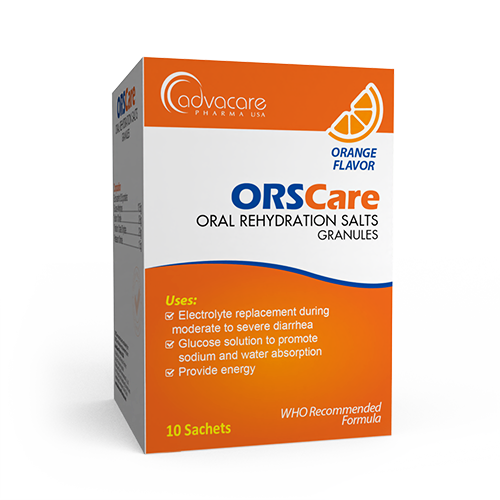
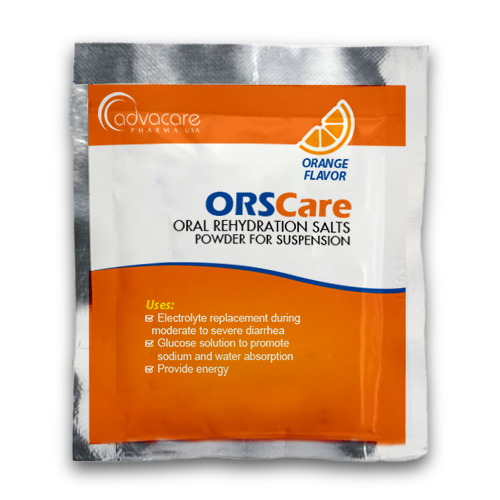

Oral Rehydration Salts
Dosage
Packaging
What are Oral Rehydration Salts?
Active Ingredients: Glucose Anhydrous, Sodium Chloride, Trisodium Citrate Dihydrate, Potassium Chloride
Oral Rehydration Salts are a fluid replacement therapy used to treat or prevent dehydration, including dehydration due to diarrhea. Oral rehydration therapy can decrease the risk of death from diarrhea significantly. It is considered safe, effective, and less invasive than other methods of rehydration therapy.
Oral Rehydration Salts are a combination of glucose (sugar) and electrolytes (salts). They work by utilizing the sodium-glucose co-transport mechanism present in the intestines. This mechanism allows for the efficient absorption of salt and water into the bloodstream, helping to replenish the body's fluid and electrolyte levels that are depleted during dehydration. The presence of glucose enhances the absorption of sodium and, consequently, water, making ORS an effective way to rehydrate.
The composition of ORS is carefully balanced to closely match the body's natural fluid composition. This balance is critical for ensuring that the therapy treats dehydration without causing an imbalance in blood sugar or electrolyte levels. The standard ORS formula recommended by the World Health Organization contains sodium chloride, potassium chloride, trisodium citrate dihydrate, and glucose anhydrous.
Due to its effectiveness and ease of administration, ORS is widely used in various settings, particularly in developing countries where access to medical care may be limited. It is commonly used in the management of dehydration caused by diarrhea, which can be life-threatening, especially in young children and the elderly. ORS is also used in situations of excessive fluid loss, such as in heatstroke or vigorous exercise, making it a versatile tool in both clinical and non-clinical settings.
AdvaCare Pharma is a global supplier of Oral Rehydration Salts. Our medical products are manufactured in our facilities in China, India, and the USA. These factories are regularly inspected to ensure they reach the high standards necessary to meet GMP certification.
Why are we a quality ORS manufacturer?
AdvaCare Pharma, a GMP-compliant pharmaceutical company, specializes in the manufacture of ORS (Oral Rehydration Salts). Our strategic manufacturing locations and innovative management systems ensure full control over the supply chain, resulting in enhanced quality standards and decreased costs throughout the production, transport and import processes. As a trusted ORS manufacturer, we globally supply a comprehensive range of 55+ oral liquid medicines in solution dosage form to more than 65 countries.
Uses
What are Oral Rehydration Salts used for?
It is used to treat and prevent dehydration caused by various reasons, particularly diarrhea.
How are Oral Rehydration Salts used?
This medication is manufactured as a powder. It should be added to clean water and taken orally.
What dose should be taken?
For mild dehydration, the usual dose is 20ml/kg/hr for the first hour and 10ml/kg/hr for the next 6-8 hours.
For moderate dehydration, the usual dose is 20ml/kg/hr for the first hour and 15-20ml/kg/hr for the next 6-8 hours.
Treatment plans should be reassessed at 4-hour intervals and continue as long as diarrhea and signs of dehydration persist.
Refer to a doctor or pharmacist for guidelines on dosage.
Can Oral Rehydration Salts be used in all age groups?
Oral Rehydration Salts (ORS) can be used safely across all age groups, including infants, children, and the elderly. Dosage may vary based on age, weight, and severity of dehydration.
What are the key electrolytes found in Oral Rehydration Salts?
The key electrolytes typically found in ORS include sodium chloride, potassium chloride, and trisodium citrate.
Is it necessary to use a specific type of water for mixing Oral Rehydration Salts?
Use clean, safe drinking water to mix with ORS. If the purity of the water is questionable, it should be boiled and cooled before use to avoid the risk of further gastrointestinal infection.
How does ORS compare to regular sports drinks or plain water in treating dehydration?
While sports drinks and plain water can help with mild dehydration, they do not contain the ideal balance of electrolytes and glucose found in ORS. ORS is specifically designed to replace lost fluids and electrolytes more effectively in cases of severe dehydration, especially due to diarrhea.
How should Oral Rehydration Salts be administered to infants and very young children?
In infants and very young children, ORS should be administered with special care, using a spoon or a syringe for small, manageable amounts. Give the solution slowly and steadily, especially if the child is vomiting, to prevent choking and ensure proper absorption.
Can Oral Rehydration Salts be used for dehydration not caused by diarrhea?
ORS can be used for dehydration resulting from various causes, not just diarrhea. This includes dehydration due to vomiting, fever, excessive sweating, or heatstroke.
Can Oral Rehydration Salts be used to prevent dehydration?
ORS can also be used preventively in situations where there is a high risk of dehydration, such as during intense physical activity, hot weather, or when experiencing mild diarrhea or vomiting.
How quickly does ORS start working to relieve symptoms of dehydration?
ORS begins to rehydrate the body soon after ingestion, with significant improvement in symptoms typically observed within a few hours. The full rehydration process depends on the severity of dehydration and the individual's response to treatment.
Can ORS be used in conjunction with other medications?
ORS does not typically interact with other medications, making it safe to use alongside most treatments. Consult a doctor prior to taking it.
Is ORS suitable for people with diabetes?
ORS contains glucose, which is essential for the effective absorption of electrolytes. People with diabetes should monitor their blood sugar levels when using ORS and consult with a healthcare provider.
How does ORS differ from intravenous (IV) rehydration therapy?
ORS is an oral treatment and ideal for mild to moderate dehydration, while IV therapy is used in clinical settings for severe dehydration or when oral intake is not possible. ORS is less invasive and can be administered at home or in non-clinical settings.
Can ORS be used in cases of severe dehydration?
ORS can be used as an initial treatment but medical attention is crucial as severe dehydration might require more aggressive treatment, including IV fluids.
Can ORS be flavored to improve taste for children or sensitive individuals?
Flavoring agents can be added to ORS to improve its taste, especially for children who might be reluctant to drink it. Avoid adding excessive sugar or artificial sweeteners as this may alter the effectiveness of the solution.
How does ORS interact with food and drink intake during dehydration recovery?
During dehydration recovery with ORS, it is generally recommended to eat small, frequent meals and avoid foods that are high in sugar or fat, which can worsen diarrhea.
Are there any contraindications for using ORS?
The primary contraindications for using ORS include known hypersensitivity to any of the ingredients, and conditions that involve fluid and electrolyte imbalances, such as severe kidney disease or heart failure.
Can ORS be used by individuals with high blood pressure or heart disease?
Individuals with high blood pressure or heart disease should use Oral Rehydration Salts cautiously. ORS contains sodium, which can affect blood pressure and fluid balance.
Is it safe to consume ORS for an extended period?
ORS is safe for short-term use as it is designed for acute dehydration treatment. Prolonged use without medical supervision is not recommended, especially in cases of chronic diarrhea or vomiting where underlying causes need to be addressed.
Is it possible to make a homemade version of Oral Rehydration Salts?
A homemade version of ORS can be made using common household ingredients: clean water, salt, and sugar. The World Health Organization provides specific proportions to ensure the correct balance of electrolytes. Commercially available ORS is recommended for its precise and standardized formulation, which is critical for effective treatment.
Can Oral Rehydration Salts be used in conjunction with other dehydration treatments?
ORS can be used alongside other treatments for dehydration, such as increased fluid intake and dietary adjustments. In cases of severe dehydration, ORS might be used as an initial treatment. When using ORS in combination with other treatments, the overall fluid and electrolyte balance should be monitored to avoid overhydration or electrolyte imbalances.
Are there any specific storage conditions for Oral Rehydration Salts?
Unopened packets of ORS should be stored in a cool, dry place. Once the solution is prepared, it should be consumed within 24 hours if kept at room temperature, or within 48 hours if refrigerated.
Side Effects
As with all pharmaceuticals, some unwanted effects can occur from the use of Oral Rehydration Salts (ORS).
Common side effects include, but may not be limited to:
- fever (febrile response)
- chills
- itching (pruritus) or rash
For a comprehensive understanding of all potential side effects, consult a medical professional.
If you experience side effects like fever, chills, itching, or rash while using ORS, the symptoms must be monitored closely. Should these persist or worsen, discontinue use and seek medical advice promptly. In many cases, these reactions might indicate an allergic response or an underlying condition that requires medical attention.
Precautions
Do NOT use Oral Rehydration Salts if:
- You are allergic to any of the ingredients.
- You suffer from extracellular hyperhydration.
The use of Oral Rehydration Salts during pregnancy or breastfeeding is not considered harmful. Consult your doctor or healthcare professional before treatment.
If the eyelids become swollen during the treatment, stop drinking the oral rehydration salts. Drink plain water and resume using the medicine after the puffiness has been relieved.
In case of vomiting, stop using the product for 10 minutes. Resume at a slower pace, drinking small but frequent amounts. Do not stop treatment. If vomiting persists despite slowing down the intake of ORS, seek medical attention immediately. Also monitor for signs of overhydration, such as headache, confusion, or seizures, and adjust the consumption accordingly as per medical guidance.
References
Oral Rehydration Therapy for Invasive Diarrhea
Managing diarrheal diseases emphasizes the use of oral rehydration therapy (ORT). Moderate dehydration is commonly seen with invasive diarrhea, and ORT effectively addresses this issue.
Both hospital and community studies have shown the effectiveness of ORT for rehydrating patients with invasive diarrhea. A clinical trial of oral rehydration solution (ORS) for treating diarrheal diseases in children under 5 years old confirmed these findings.
Children with moderate dehydration, particularly those with culture-proven invasive diarrhea, benefited the most from ORS and could gain weight easily after rehydration.
The conclusion of this study was that ORT should be administered at the first signs of watery or dysenteric diarrhea, no matter the cause or whether antibiotics were used or not.
