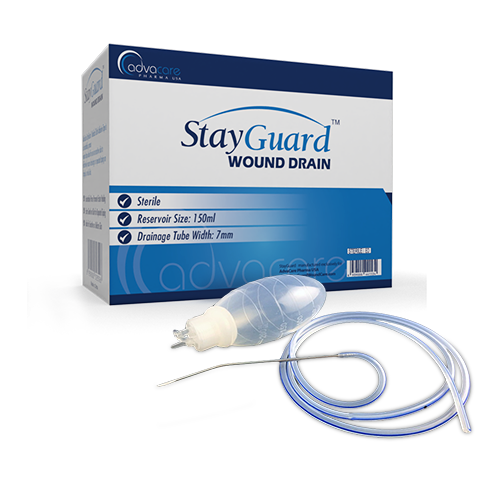
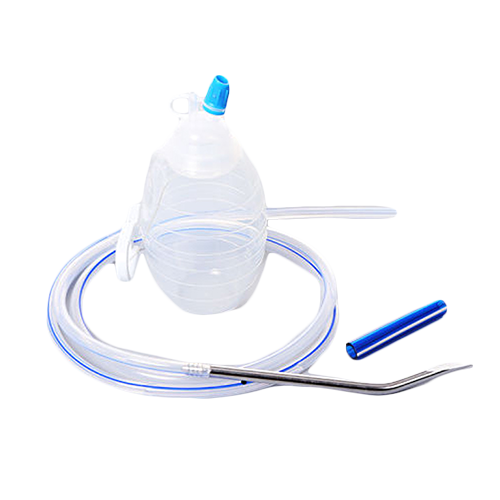

Wound Drain
System Parts
Trocar
Drainage Tube Width
Reservoir Size
Packaging
What is a Wound Drain?
A Wound Drain is used to remove excess fluids or blood from a surgical or traumatic wound. It comes with or without a trocar and in various reservoir sizes ranging from 100ml to 400ml. This surgical drain facilitates the proper drainage of fluids, promoting a clean and controlled healing environment.
It is made of medical-grade materials and is designed to be safe and easy to use, providing healthcare professionals with an essential tool for post-operative care and wound management.
At AdvaCare Pharma, we believe that quality and safety are paramount. That's why our Wound Drains are manufactured to meet the highest standards. Our production facilities are ISO and CE certified, and we adhere to all healthcare and regulatory guidelines. Regular inspections are conducted to ensure the consistent availability of dependable medical supplies.
Product Specifications
System Parts
Reservoir serves as a collection bag, effectively containing and storing the fluid that drains from the wound. Made of clear and transparent material, the reservoir allows for easy visual inspection of the fluid, enabling healthcare professionals to monitor the drainage. With graduated markings, it provides a convenient way to measure the amount of fluid collected over time, facilitating accurate tracking and assessment of the patient's progress.
Drainage Tube is a flexible and pliable tube that establishes a connection between the wound and the reservoir. Designed to facilitate the smooth flow of fluid, this tube allows the fluid drainage from the wound to be efficiently directed into the collection bag to facilitate and ensure proper containment.
Adapters ensure a secure and proper connection between the drainage tube, wound site, and reservoir. With their design focused on creating a sealed connection, they effectively prevent any leakage of fluid or air, maintaining the integrity of the system. These connectors are an essential component that enables smooth and efficient drainage, providing a reliable solution for managing wound exudate.
Trocar is a pointed instrument designed to create an initial puncture or incision in the skin, aiding the insertion of the drainage tube into the wound. It serves as a valuable tool in surgical procedures or situations where a controlled incision is necessary. The trocar can be included or excluded as an option in the closed wound drainage system, providing flexibility and adaptability based on specific clinical needs.
Why are we a leading Wound Drain manufacturer?
With a proven track record spanning over two decades, AdvaCare Pharma is a reputable exporter and manufacturer of Wound Drains and other medical supplies for wound closure. Our partnerships with distributors, hospitals, NGOs, and pharmacies in 65 markets reflect our dedication and reliability.
At AdvaCare Pharma, our core focus is on manufacturing wound drains, and other wound drainage devices, that are quality-assured and cost-effective. We value our collaborations with distributors, hospitals, NGOs, and pharmacies, and we are committed to their success in their respective industries.
Uses
How should a Wound Drain be used?
To use a wound drain, start by ensuring that the drain is sterile and the wound area is prepared. Position the drain near the wound site, ensuring that the open end of the drain is placed inside the wound or in the area where fluid needs to be drained.
Gently insert the drain into the wound, being careful not to cause further damage or discomfort. Secure the drain in place using adhesive strips, sutures, or any other method recommended by your healthcare provider. Ensure that the drain is not kinked or twisted, as this may impede the flow of fluid.
What happens after the Wound Drain is inserted?
Regularly monitor the drainage, emptying the collection bag or container as needed and keeping track of the amount and appearance of the fluid. Keep the area around the drain clean and dry, and report any signs of infection, excessive bleeding, or other complications to your healthcare provider promptly.
FAQs
How does a Wound Drain work?
A wound drain works by creating a pathway for excess fluids or blood to be drained from a surgical or traumatic wound. The drain is inserted into the wound, and the negative pressure within the drain system helps remove the fluids, promoting proper healing.
What are the parts of a Wound Drain?
A wound drain typically consists of a reservoir, which collects the fluids, a drainage tube that connects the reservoir to the wound, adapters to secure the connections, and a trocar (in some cases) used to facilitate the insertion of the drain into the wound.
What is the difference between a Wound Drain that's with or without a trocar?
A wound drain with a trocar has a sharp, pointed instrument that helps puncture the wound during insertion, facilitating the placement of the drain. On the other hand, a drain without a trocar relies on a different technique for insertion, often guided by the surgeon's skill and preference.
What are the available reservoir sizes for Wound Drains?
Wound drains come in various reservoir sizes, typically ranging from 100ml to 400ml. The choice of reservoir size depends on the anticipated volume of fluids that are expected to be drained from the wound. Surgeons consider factors such as the size of the wound, the extent of the procedure, and the patient's condition when selecting the appropriate reservoir size.
Can you guide us through regulatory processes for importing your Wound Drains?
Absolutely! We provide comprehensive regulatory support to distributors, ensuring compliance with local regulations when importing our medical devices. With our skilled Regulatory Affairs Department, comprising pharmacists, biomedical engineers, QA professionals, and documentation specialists, we ensure smooth product registration.
