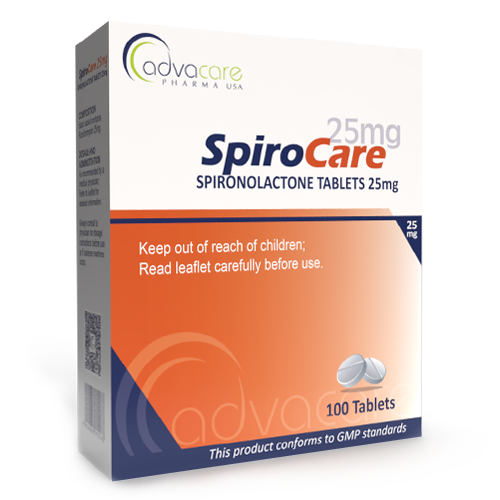


Spironolactone Tablets
Dosage
Packaging
What is Spironolactone?
Active Ingredients: Spironolactone
Spironolactone is a steroidal mineralocorticoid receptor antagonist (MRA) and potassium-sparing diuretic. It is used in the management of conditions including heart failure, hypertension, edema associated with certain hepatic or renal disorders, and primary hyperaldosteronism. Specific approved indications vary according to the product registration and prescribing information in each market.
Spironolactone competitively blocks the action of aldosterone at mineralocorticoid receptors. This reduces sodium and water retention while decreasing potassium excretion. In addition to its diuretic effect, mineralocorticoid receptor blockade is an established component of pharmacological treatment for certain patients with heart failure.
The 2026 ESC Guidelines for the management of heart failure classify mineralocorticoid receptor antagonists as foundational medical therapy. The guideline recommends an MRA for adults with symptomatic heart failure independent of left ventricular ejection fraction (LVEF) to reduce the risk of heart-failure hospitalization or cardiovascular death (Class I, Level A). For heart failure with reduced ejection fraction (HFrEF), the evidence supporting this recommendation includes steroidal MRAs such as spironolactone. This clinical-practice recommendation should be distinguished from the approved indications for individual spironolactone products, which are determined by national regulatory authorities.
AdvaCare Pharma is a global distributor and manufacturer of Spironolactone Tablets. Our supply chain is thoroughly vetted to ensure it meets health, safety, and environmental standards. Spironolactone Tablets are produced in our GMP-certified facilities in China, India, and the USA.
Why choose us as your Spironolactone manufacturer?
AdvaCare Pharma is a manufacturer of Spironolactone Tablets and other cost-effective and sustainable pharmaceuticals for an ever-changing global market. Spironolactone Tablets are a GMP-compliant medicine that is available for distribution.
As a leading Spironolactone manufacturer, we work with international partners including pharmaceutical distributors, hospitals, pharmacies and other medical and government organizations. We have established a vested supplier-distributor relationship, ensuring a mutually advantageous outcome during market entry and development.
Uses
What is Spironolactone used for?
It is used to treat heart failure, hypokalemia, hyperaldosteronism and ascites (fluid retention). It is used alone or in combination with other medications to treat high blood pressure. Lowering high blood pressure helps prevent strokes, heart attacks and kidney problems.
How should Spironolactone Tablets be used?
Spironolactone Tablets are intended for oral administration. The prescribed dose and treatment schedule depend on the indication, kidney function, serum potassium levels, response to treatment and locally approved prescribing information.
What dose should be taken?
The appropriate dose of spironolactone varies substantially according to the condition being treated and the patient's clinical status.
For heart failure, the 2026 ESC guideline lists spironolactone 12.5–25 mg once daily as an evidence-based starting range and 50 mg once daily as the target dose used in key heart-failure trials. A lower starting dose may be considered when kidney function or the risk of hyperkalemia warrants additional caution.
These guideline doses should not be interpreted as individual prescribing instructions. Kidney function and serum potassium should be assessed when spironolactone is initiated and monitored during treatment. Dosing for hypertension, edema and primary hyperaldosteronism differs from dosing used for heart failure.
Always follow the prescribing information registered in the destination market and the dosage recommended by a qualified healthcare professional.
Side Effects
As with all pharmaceuticals, unwanted effects can occur with the use of Spironolactone Tablets.
Reported adverse effects include, but are not limited to:
- gastrointestinal symptoms such as nausea, vomiting, diarrhea or abdominal cramping
- dizziness, headache or drowsiness
- leg cramps
- breast pain or gynecomastia
- menstrual irregularities
- electrolyte disturbances, including hyperkalemia
Spironolactone can cause clinically significant hyperkalemia, particularly in patients with impaired kidney function or those taking other medicines or supplements that increase potassium levels. Kidney function and serum electrolytes should be monitored as clinically appropriate.
Seek prompt medical attention for symptoms that may indicate a serious reaction, including:
- muscle weakness or an abnormal heartbeat that may be associated with high potassium
- severe allergic reactions
- severe or extensive skin reactions
- unusual bleeding or bruising
- jaundice
- markedly reduced urination or symptoms suggesting worsening kidney function
For a comprehensive understanding of potential adverse effects, warnings and interactions, consult the locally approved prescribing information or a qualified healthcare professional.
Precautions
Do NOT use Spironolactone Tablets if:
- You are allergic to spironolactone or any of the other ingredients.
- You have severely impaired liver or kidney function.
- You have a blood disorder like porphyria.
- You have a high potassium level in your blood (hyperkalemia).
- You have Addison's disease.
- You are pregnant, planning to become pregnant, or are breastfeeding.
- You take eplerenone.
Spironolactone can increase serum potassium. The risk of hyperkalemia is greater in patients with impaired kidney function and in those taking potassium supplements, potassium-containing salt substitutes, or medicines that can increase potassium levels. Potassium and renal function should therefore be monitored as clinically appropriate, particularly after treatment is started or the dose is changed. See the spironolactone prescribing information for detailed warnings, precautions and drug interactions.
Patients should inform their doctor about kidney or liver disease and all prescription medicines, non-prescription medicines and supplements they are taking before treatment.
Spironolactone should generally be avoided during pregnancy unless a healthcare professional determines that treatment is appropriate. Patients who are pregnant, planning pregnancy or breastfeeding should discuss treatment with their doctor.
Safety and effectiveness in pediatric patients may depend on the locally approved product information. Follow the prescribing information registered in the destination market.
References
2026 ESC Guidelines for the Management of Heart Failure
The European Society of Cardiology's 2026 heart-failure guideline provides updated recommendations for the diagnosis and management of heart failure. The guideline classifies mineralocorticoid receptor antagonists as foundational medical therapy and recommends MRA treatment for symptomatic heart failure independent of left ventricular ejection fraction, with a Class I, Level A recommendation. It also provides evidence-based starting and target doses used for spironolactone in major heart-failure trials.
Spironolactone Tablets — Prescribing Information
The U.S. prescribing information provides detailed information on spironolactone indications, dosage, contraindications, warnings, monitoring, drug interactions and adverse reactions. Particular attention is given to the risk of hyperkalemia and the need to monitor serum potassium and renal function during treatment.
Randomized Aldactone Evaluation Study (RALES)
The Randomized Aldactone Evaluation Study evaluated spironolactone in patients with severe heart failure and reduced left ventricular ejection fraction receiving standard therapy. The trial established important evidence supporting mineralocorticoid receptor blockade with spironolactone in HFrEF and forms part of the evidence base underlying contemporary heart-failure treatment recommendations.
Spironolactone for Heart Failure with Preserved Ejection Fraction — TOPCAT
The TOPCAT trial evaluated spironolactone in patients with symptomatic heart failure and preserved ejection fraction. Although spironolactone did not significantly reduce the trial's overall primary composite outcome, the study contributed important evidence regarding spironolactone in HFpEF and is among the studies considered in subsequent analyses and guideline recommendations.
