

Albendazole Oral Suspension
Dosage
Packaging
What is Albendazole Oral Suspension 400mg/10ml?
Active Ingredient: Albendazole
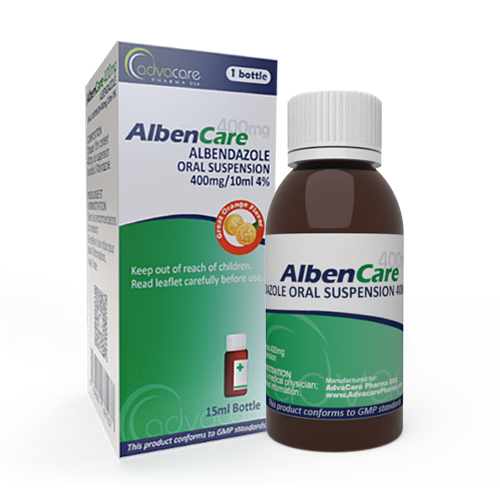
Albendazole Oral Suspension 400mg/10ml (4%) is a human anthelmintic medicine. Each 10ml provides 400mg of albendazole. The liquid dosage form can support administration when a suspension is appropriate under the approved product information.
Albendazole is a benzimidazole anthelmintic. Its active metabolite, albendazole sulfoxide, binds parasite β-tubulin and inhibits microtubule formation. This disrupts glucose uptake and depletes energy stores in susceptible helminths. See the official albendazole prescribing information for established pharmacology and safety information.
Human indications differ by country. Depending on the locally authorized label and clinical context, albendazole may be used for selected intestinal or tissue helminth infections. It is not active against every parasite. Diagnosis, dose and treatment duration should be determined by a qualified healthcare professional. The CDC clinical-care guidance for soil-transmitted helminths illustrates how recommended regimens differ by organism.
Longer systemic treatment courses, including those used for neurocysticercosis or cystic hydatid disease, require specialist oversight. Blood counts and liver enzymes may need monitoring. Concomitant corticosteroid or anticonvulsant treatment may also be required in selected patients, according to the diagnosis and approved prescribing information.
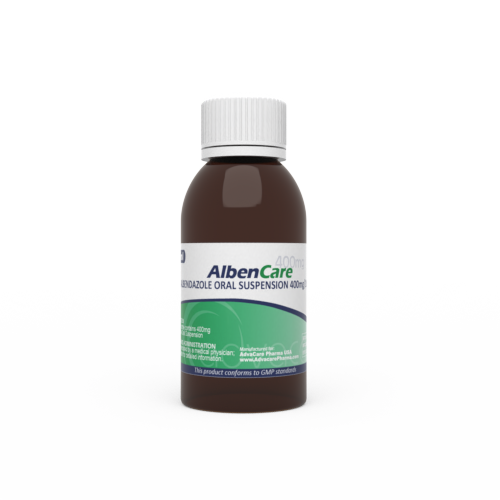
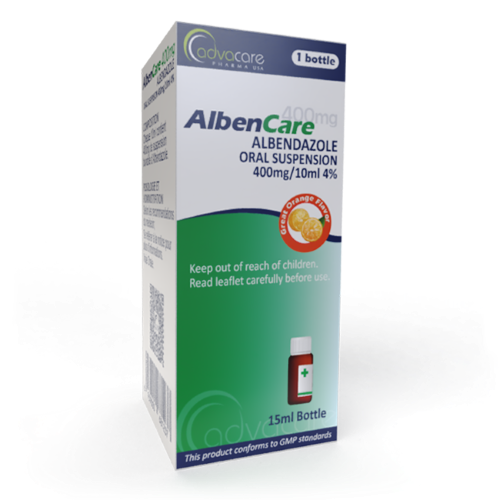
AdvaCare Pharma manufactures AlbenCare™ Albendazole Oral Suspension for human pharmaceutical markets. The 400mg/10ml formulation is supplied in a 15ml bottle/box. GMP-compliant manufacturing, quality documentation and registration support are available for distributors and importers, subject to destination-market requirements.
This page covers the human formulation only. Veterinary Albendazole Oral Suspension has different strengths, pack sizes, target species, directions and food-safety requirements.
Why are we a quality Albendazole manufacturer?
AdvaCare Pharma manufactures AlbenCare™ Albendazole Oral Suspension 400mg/10ml for human pharmaceutical markets. The product is supplied as a 4% oral suspension in a 15ml bottle/box. Manufacturing is carried out in GMP-compliant facilities, with quality documentation and registration support available for pharmaceutical distributors and importers according to market requirements.
The human-use formulation is managed separately from AdvaCare Pharma's veterinary albendazole range, with specifications, packaging and regulatory requirements appropriate to its intended market.
Uses
What is Albendazole Oral Suspension used for in humans?
Albendazole treats susceptible helminth infections. The authorized indication depends on the country and product label. It may include selected intestinal nematode infections and certain tissue cestode infections. Clinical diagnosis is important because albendazole does not treat every parasite.
How is Albendazole Oral Suspension taken?
Shake the bottle well. Measure the dose with an appropriate oral dosing device and take it exactly as prescribed. Whether it is taken with food depends on the indication and approved directions. Fat-containing food can increase systemic exposure, which may be intended for tissue infections but is not a universal instruction for every regimen.
How is the albendazole dose determined?
The dose and duration depend on the parasite, infection site, age, body weight, comorbidities and local prescribing information. A single-dose intestinal deworming regimen is not interchangeable with the longer, monitored courses used for neurocysticercosis or hydatid disease. Consult the official albendazole prescribing information for labeled regimens and monitoring requirements.
Is albendazole syrup the same as Albendazole Oral Suspension?
In many markets, liquid albendazole is commonly called “albendazole syrup.” Pharmaceutically, it is an oral suspension: the albendazole is suspended rather than dissolved, which is why the bottle must be shaken before each dose. AdvaCare Pharma’s AlbenCare™ is registered and supplied as Albendazole Oral Suspension 400mg/10ml.
Can albendazole be used in public-health deworming programs?
Yes. Albendazole is used in organized preventive-chemotherapy programs in endemic settings. Programs should follow national policy and WHO guidance on preventive chemotherapy. Population-level recommendations are not a substitute for individual diagnosis or self-treatment.
Can Albendazole Oral Suspension be used during pregnancy or breastfeeding?
Pregnancy requires an individualized benefit-risk assessment. Product labeling may require pregnancy testing and contraception. Public-health recommendations for deworming in pregnancy apply only in defined endemic settings and stages of pregnancy. Available lactation data are limited; use should follow professional advice and the locally approved label.
Does albendazole require laboratory monitoring?
Short regimens and prolonged systemic courses have different monitoring needs. Longer or repeated courses may require blood counts and liver-function tests before and during treatment. Patients with liver disease or abnormal baseline results may need closer follow-up.
Can this human suspension be given to animals?
No. This 400mg/10ml product is presented for human pharmaceutical use. Veterinary products have separate strengths, species indications, dosing instructions and withdrawal periods. Use only a veterinary-authorized product under veterinary direction.
How should Albendazole Oral Suspension be stored?
Store and handle the product exactly as stated on the approved label and carton. Keep the bottle closed, protect it from unsuitable heat or moisture, and keep it out of reach of children. Do not use after the expiry date.
Side Effects
As with all medicines, Albendazole Oral Suspension may cause side effects, although not everyone experiences them. The type and frequency of adverse reactions can vary according to the condition being treated, dose and duration of treatment.
Reported side effects of albendazole include:
- abdominal pain, nausea or vomiting
- headache or dizziness
- increased liver enzymes
- fever
- reversible hair thinning or hair loss during prolonged treatment
Seek prompt medical care for jaundice, dark urine, severe rash, facial swelling, breathing difficulty, unusual bruising, persistent fever, sore throat or marked weakness. These may indicate hepatic injury, hypersensitivity or clinically important changes in blood-cell counts.
Longer systemic courses can cause bone-marrow suppression and hepatotoxicity. Monitoring requirements are described in theofficial albendazole prescribing information. This summary is not exhaustive; consult the locally approved label and a qualified healthcare professional.
Precautions
Do NOT use Albendazole Oral Suspension if: • You are with known hypersensitivity to albendazole, other benzimidazoles or any formulation ingredient.
Before treatment, a healthcare professional should review pregnancy status, liver function, blood disorders, current medicines and the infection being treated. Albendazole can cause fetal harm based on animal data. Pregnancy testing and effective contraception may be required for patients of reproductive potential, in line with the locally approved product information.
For prolonged or repeated courses, monitor blood counts and liver enzymes at the intervals specified in the approved label. Treatment may need to be interrupted if clinically significant bone-marrow suppression or hepatic injury occurs. Patients being treated for neurocysticercosis should be assessed for retinal lesions before therapy when indicated.
Clinically relevant interactions can occur. Dexamethasone, praziquantel and cimetidine may increase concentrations of albendazole sulfoxide. Carbamazepine, phenobarbital, phenytoin and ritonavir may lower them. Theophylline monitoring is recommended in relevant patients. Review all prescription medicines, non-prescription medicines and supplements before use.
These precautions do not replace the full locally approved prescribing information.
References
Preventive Chemotherapy to Control Soil-Transmitted Helminth Infections in At-Risk Population Groups
This World Health Organization (WHO) guideline provides evidence-informed recommendations on the use of anthelmintic medicines as part of preventive chemotherapy programs in areas where soil-transmitted helminth infections are endemic.
The guideline discusses the use of albendazole and other anthelmintic medicines in organized public-health deworming programs for defined at-risk populations. Recommendations vary according to factors such as age, pregnancy status, local prevalence of infection, and the population being treated.
The guideline confirms that albendazole can have a role in preventive deworming programs when administered according to established public-health recommendations. Individual treatment or preventive use should follow local medical guidance and approved treatment protocols.
Efficacy and Safety of Albendazole in Hookworm-Infected Preschool-Aged Children, School-Aged Children, and Adults in Côte d'Ivoire: A Phase 2 Randomized, Controlled Dose-Finding Trial
This randomized, controlled dose-finding trial evaluated the efficacy and safety of different doses of albendazole for the treatment of hookworm infection in preschool-aged children, school-aged children, and adults in Côte d'Ivoire.
The study enrolled 38 preschool-aged children, 133 school-aged children, and 196 adults. Participants received different albendazole doses according to their study group, and treatment efficacy was assessed using cure rates and reductions in hookworm egg counts after treatment.
The results demonstrated a dose-response relationship for albendazole against hookworm infection in the studied populations. The findings provide clinical evidence supporting the anthelmintic activity of albendazole, while the appropriate dose and treatment regimen should be determined according to the indication, patient characteristics, and approved local prescribing information.
