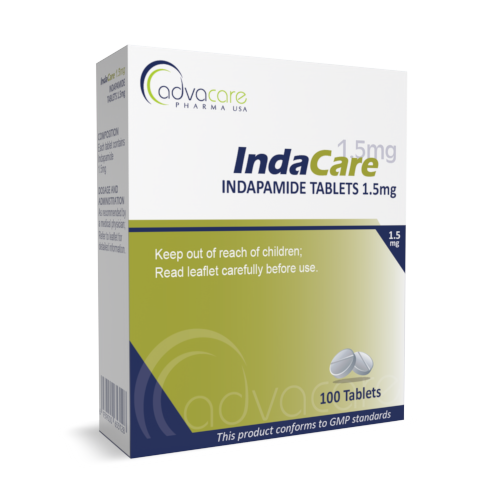
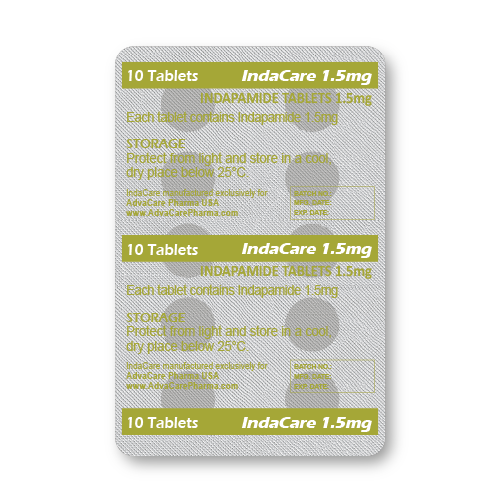

Indapamide Tablets
Dosage
Packaging
What is Indapamide?
Active Ingredients: Indapamide
Indapamide Tablets are a drug used to treat hypertension (high blood pressure) and edema (fluid retention). It is used to reduce fluid and salt retention that may be associated with certain conditions, like congestive heart failure. Indapamide may be combined with other antihypertensive agents to treat hypertension.
Indapamide is a thiazide-like diuretic, which is also called a "water pill" or "water tablet". These types of drugs work by increasing urine flow. This reduces the amount of water in the body and helps lower blood pressure.
The American College of Cardiology's 2026 Expert Consensus Decision Pathway identifies indapamide as a thiazide-like diuretic option when optimizing treatment for adults with resistant hypertension. The guidance discusses switching from hydrochlorothiazide to indapamide or chlorthalidone as one strategy for improving blood-pressure control before escalating treatment. Selection of therapy should account for the patient's current medication regimen, kidney function and electrolyte status.
AdvaCare Pharma is a GMP-certified manufacturer and exporter of Indapamide Tablets. Our company offers a wide range of high-quality and cost-effective medications that are available for distribution. These medications have been produced in our facilities in China, India, and the USA.
Why are we a trusted Indapamide manufacturer?
Indapamide Tablets are manufactured and distributed by AdvaCare Pharma, an American-owned and operated company.
We are committed to creating sustainable and cost-effective pharmaceutical products to improve access to healthcare solutions worldwide. We are proud to work with a variety of international partners, including distributors, hospitals, pharmacies, and many other institutions.
Uses
What is Indapamide used for?
It is used to treat hypertension (high blood pressure) and edema (excess buildup of fluid).
How are Indapamide Tablets used?
This medication is intended to be taken orally. It is typically taken once per day in the morning.
What dose should be taken?
For heart failure, the usual dose is 2.5-5mg per day.
For hypertension, the usual dose is 2.5mg, taken once per day.
Refer to a doctor or pharmacist for more specific guidelines on dosage. Do not exceed what they advise.
Side Effects
As with all pharmaceuticals, some unwanted effects can occur from the use of Indapamide Tablets.
Common side effects include, but may not be limited to:
- mild skin rash
- nausea or vomiting
- dizziness
Seek medical attention if the following develop:
- arrhythmia
- severe abdominal pain or other signs of pancreatitis
- symptoms of a liver problem
- signs of an allergic reaction
For a comprehensive understanding of all potential side effects, consult a medical professional.
If any symptoms persist or worsen, or you notice any other symptom, please call your doctor immediately.
Precautions
Do NOT use Indapamide Tablets if:
- You are allergic or hypersensitive to any of the ingredients.
- You have had a hypersensitivity reaction to a sulfa drug or any other drugs.
- You have problems with urination.
This medication may not be suitable for people with certain conditions, including:
- liver or kidney disease
- low levels of potassium or sodium
- gout
- diabetes
- lupus
There is not sufficient evidence to show the safety of this medication during pregnancy or breastfeeding. Consult a doctor or healthcare professional before treatment.
Many drugs are known to interact with Indapamide, including amiodarone, cisapride, dofetilide, dolasetron, dronedarone, droperidol, levomethadyl, lithium, pimozide, tizanidine, and ziprasidone.
Do not drink alcohol while undergoing treatment with this medicine. Avoid driving until the effects of the medicine are clear.
Indapamide 1.5mg: Why the most common dose?
Indapamide is available in different strengths and formulations for the management of hypertension. The 1.5mg strength is commonly associated with modified-release formulations in certain markets, while 2.5mg is available as a conventional-release tablet. These formulations have different release characteristics and should be used according to the approved product labeling. Indapamide can cause electrolyte disturbances, including low potassium or sodium levels, so appropriate clinical monitoring is important.
References
Optimizing Blood Pressure Care in Patients With Resistant Hypertension: 2026 ACC Expert Consensus Decision Pathway
The objective of this expert consensus pathway, published by the American College of Cardiology (ACC), was to provide practical recommendations for improving blood-pressure management in adults with resistant hypertension, including optimizing existing antihypertensive treatment before introducing additional medications.
The pathway draws on established clinical evidence and hypertension guidelines to address accurate blood-pressure measurement, confirmation of resistant hypertension, medication adherence, and treatment optimization. It specifically discusses the selection of thiazide and thiazide-like diuretics as part of multidrug antihypertensive regimens.
The guidance identifies switching from hydrochlorothiazide to longer-acting thiazide-like diuretics, including indapamide or chlorthalidone, as an option for achieving more consistent blood-pressure control. It also emphasizes optimizing diuretic treatment before escalating to additional antihypertensive agents. These recommendations apply to selected patients with resistant hypertension and require consideration of kidney function, electrolyte balance, and individual treatment response.
The ACC pathway reinforces the clinical role of indapamide as a thiazide-like diuretic that may be considered when optimizing treatment for resistant hypertension. The document represents professional consensus guidance rather than a new clinical trial and does not establish a new approved indication or demonstrate superior efficacy for a particular indapamide product or formulation.
